Watch Your Dog for Signs of Stress
September 15, 2008 by Paul
Filed under Dog Safety, Featured Dog Health

Reading Your Dog’s Body Language
Although dogs can’t communicate with us in our conventional manner, they do let us know, quite often, what they’re feeling and thinking about doing in a given situation. They do this through the use of body postures and facial expressions. These gestures can be very subtle, from a simple flick of the tongue, to the overly obvious, such as barking and/or biting.
Since these signals can be so subtle and reactive behaviors can happen so quickly, it is very important that dog owners are able to recognize the signals their dog is sending their way. This will allow the informed and prepared dog owner to be proactive in defusing stressful situations that can potentially lead to fearful or aggressive behavior.
Stress/Submissive Posture

The dog above is showing signs of stress and submission. She has been exposed to something that has caused her to go beyond her comfort zone, and she is subsequently showing signs that she is having a difficult time coping with it.
The point to remember about stress is that it is totally subjective. What’s overly stressful for one dog may be neutral or even somewhat enjoyable for another. Therefore, it’s important to understand and pay attention to your dog’s individual stress threshold levels and know when she’s had too much.
No learning occurs when the body is stressed because of chemical influences on the brain. The animal is concentrating on survival first and foremost. Stress removal is the only thing on her mind. These behaviors are totally out of the animal’s control.
What to Do If Your Dog Show Signs of Stress
If your dog is showing signs of stress during your training sessions, the best thing you can do is take a break. Stop and give the dog time to rest. When you go back to training, start with something easier you know the dog will get correct, and then work your way up again.
If your dog is stressing because of another person, animal or particular situation, very calmly, remove the dog from that situation. Don’t rush to pick the dog up or coddle her. That will only reinforce the stressful situation. Just calmly try to get the dog’s attention on you (using food, a toy, your voice, etc.) and get her to a more relaxed environment.
Always proceed into different situations and different levels of distractions cautiously and at the dog’s level. She’ll definitely let you know if she’s ok with what you’re exposing her to.
Some additional indicators of stress (look for clusters of these (3 or more):
- Drooling
- Hackles Up
- Freezing Up/Not Moving
- Fainting
- Scratching on floor/ground with paws
- Trembling
- Tense Body
- Excessive Shedding/Dandruff
- Wanting to Escape Situation
- Excessive Yawning
- Excessive Lip Licking
Neutral/Relaxed Position

Dogs will usually assume the body position above, or something similar, when they are at ease. Each dog’s posture and facial expressions in this state will differ from dog to dog; however, the overall demeanor and body state will be very relaxed and comfortable.
Take note of your dog’s body and facial positions in this state and compare them to her body and facial positions when she experiences different levels of stress. Notice how the ears, eyes, body and tail differ between the relaxed, comfortable state and the stressful states.
Offensive Threat/Aggression Position

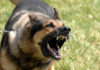
This dog has been stimulated by something in her environment and she is getting prepared to go on the offensive. She is trying to make herself look larger and more powerful through her body postures. Notice the ears, tail and hair along her back. She is completely focused on the issue at hand and will not take her eye off of it. She feels confident that she would have the upper hand, should a confrontation occur, and because of that, she’s ready to stay and fight rather than run away.
She may show her teeth, growl and/or bark. If the problem get too close within her comfort zone or gives her a good enough reason, she may attack. She is ready to defend her territory and force whatever it is, person or animal, out of that comfort zone. If, on the other hand, the dog had been excited by something she considered enjoyable, the hair on her back and neck (hackles) would be down and the tail would most likely be relaxed, lower and loosely wag. Her whole face and body would seem at easy and unthreatening.
Defensive Threat/Aggression Position

This dog is exhibiting a fear response to some stimulus. Her first choice would be to escape the object rather than to stay and fight it; however, if she is pushed too far or pushed into an area where she can’t escape from, she will protect herself.
If a dog is barking and showing this type of defensive position, do not physically correct her barking. It could make her even more fearful and possibly cause a bite reaction to protect herself. Try to get her, very calmly, far away from the fear inducing object or situation so she can relax and focus on you.
Once she’s relaxed to the point of being able to take food, try to get to perform some very simple attention-based exercises where she’s able to focus on you. This will allow her to become even more relaxed and confident again.
Each dog responds to stressful situations in different manners. Depending on the genetic makeup of the dog, amount of early socialization, proper training, etc., some dogs are able handle difficult situations extremely well, while others become extremely reactive.
By observing your dog and noticing how he or she expresses herself in varying levels of stressful environments, you’ll be better equipped to handle the situation and ensure that the fear or threat positions described above don’t occur.
Puppy Socialization
September 15, 2008 by Paul
Filed under Featured Puppies, Puppy Training

What is Socialization?
Socialization is an extremely important part in your puppy’s life. It is a process of gradually exposing her to the world’s sights, sounds and textures to teach her how to be calm and deal with each and every new learning experience with confidence, while going about her business as a happy, healthy dog.
Puppies that are not socialized properly often grow to fear or feel the need to defend themselves against things they have not been acclimated to. This can lead to problems with aggression and other reactive behaviors later on in the puppy’s life. They often grow fear things that are not known and have trouble coping when being exposed to many of life’s challenges. Puppies that are well-socialized learn how to deal with these challenges and take life’s little curveballs in-stride.
How do I Socialize my Puppy?
The key to socialization is gradually exposing your puppy to each new experience. Pushing her into overly-stressful situations too quickly can have a negative effect on her learning process. She may find herself in a position that she isn’t able to cope with, possibly creating a situation that she wants no part of in the future. Again, the key is gradual exposure.
An important part of gradually exposing your puppy to new things, is being able to read your dog’s body language. If she looks scared or nervous, don’t keep pushing her. All socialization must be done at the dog’s level. Don’t try to force her into things she isn’t ready for. Start out with something easy and then gradually try to work her up to more intense events. Socialization must always be a positive experience. You want her to think that learning new things and places is fun and interesting, not frightening and stressful. Food is a great motivator. Use high-valued treats, petting, praise and a loving attitude to make her socialization exercises overwhelmingly positive ones.
What Types of Things or Places Should I Socialize my Puppy to?
Everything and everybody!! Take her to experience new places and to meet new people where you have a good deal of control over. A dog park for a young puppy (2 -4 months) may not be the best place since the chance of developing a fear or aggressive response to other dogs at such an early age is possible. Take her to friends, neighbors, and/or family members whom have dogs that are good around puppies. If you plan on taking her to places with other dogs, always make sure those dogs will be safe around your puppy.
Visit places that have a gathering of people without a lot of other dogs. Shopping centers are good places to get your dog used to other people. Just make sure they aren’t providing too much stimulation. Remember, you want gradual exposure at the dog’s level. Expose her to cold places, children, weird noises, strange smells, textures, etc… Basically, you want to expose her to everything and anything you can think of without overwhelming or frightening her.
The table below provides a good starting for your puppy’s socialization exercises. It by no means is a complete list. Try to think of other things, places or people you can add to it. Always use high-valued rewards to make each interaction successful. You can also use them to help guide her if she is a little skeptical at first.
Puppy Socialization Table
| Exposure to different types of textures | Wood, Carpet, Tile, Grass, Wet Grass, Sand, Dirt, Water, Cement, Hills, Stones, Brick, Woodchips, etc. |
| Exposure to different locations | Different areas of the house, outside, car, beach, schoolyard, ball field, garage, groomer, vet, shopping plaza, friends, neighbors and family homes, neighborhood, etc. |
| Exposure to different people | Children, adults, men, women, elderly people, people in wheelchairs, people with crutches, canes, walkers, hats, sunglasses, people of different sizes, and colors, family, friends and neighbors |
| Exposure to different objects | Vacuum cleaner, beach balls, tennis balls, fuzzy toys, radio, television, car keys, cardboard items, children’s toys, etc. |
| Exposure to different noises (keep positive and watch pup’s comfort level) | Doorbell, children, garage-door opener, radio, television, cars, motorcycles, babies crying, people yelling, lawnmower, stove-timers, shopping carts, balls bouncing, skateboarders, etc. |
| Exposure to moving objects | Cats, squirrels, dogs, skateboarders, rollerbladers, bicycles, cars, joggers, children playing, etc. |
| Alone Time (in crate, at least an hour a day every day) | While you’re in…bathroom, outside, neighbor’s house, mowing lawn, taking out trash, cleaning the house, etc. |
| Exposure to different challenges | Up and down steps, jump over obstacles, play hide and seek, sliding doors, up on scales, walk through makeshift tunnel (cardboard, etc..) walk next to a vacuum, a stepstool, across a mat |
| Eat of out different food containers | Stainless steel bowl, wooden bowl, ceramic bowl, out of your hand, Buster cube, Kong, off of spoon, plates – paper, plastic, ceramic and wooden, nylon travel bowls, plastic travel water trays |
More Socialization Ideas!
- Go to the beach and let your dog check out the sights, sounds and smells
- Make vet and groomer trips without getting examined (get approval first). Get a treat and leave.
- Brush your dog once, treat. Brush a few times, treat. Brush for 30 seconds, treat. Keep building tolerance to being groomed.
- Put puppy in bathtub, give treat and remove. Put her in tub, put on water and treat. Keep building up tolerance to getting a bath.
- Show your dog her toothbrush and treat. Open her mouth and treat. Try brushing one tooth and treat. Build up tolerance to getting teeth brushed.
- Show your dog the nail clippers and treat. Touch her paw and treat. Hold her paw and treat. Keep building up tolerance to getting her nails clipped.
- Have a neighbor or family member ring your doorbell or knock on your door without coming in. Keep practicing this to desensitize your dog to the doorbell or knocking and the arrival of guests.
- Take out her leash and just carry it around the house for 5 minutes ignoring your dog. Put it away. Take it out and place it on the counter, again, ignore the dog. Desensitize your dog to the sight of the leash and going for a walk.
- Put a hat on your head then give your dog a treat. Put on some sunglasses and repeat. Put on hat and sunglasses and again give her a treat.
- Have young children hand-feed your dog some food and treats.
Puppy Potty Training
September 14, 2008 by Paul
Filed under Puppy Training
“How do you know when he needs to go?” is a familiar question many new dog owners ask when they bring their puppy home for the first time. During this introductory period, the answer to that question may not be the most apparent, especially after your adorable, little ball of fur announces his presence by staking his claim to a section of your living room. Don’t fret though. The good news is that this mystery period doesn’t last very long before you’ll be able to identify those subtle and not-so-subtle moments when he is telling you that he really, really needs a trip to the bathroom.
There are two main keys to ensure you are setting your dog up to be a star pupil with his puppy potty training lessons. They are:
- Make sure you’re not giving him too much freedom too soon in the house, especially without proper supervision. Really pay attention to your puppy during this potty training period. Unsupervised time leads to accidents. Remember at this stage in his life, if you give him an opportunity to make a mistake, chances are, he probably will. Keep areas to the house closed or gated off from the puppy unless you are around to supervise him. Until he is completely potty trained you need to be aware of his actions and be able to interrupt him either before or just as soon as problems occur. This is probably your most important component.
- Create a daily eating and elimination routine and really stick to it until you know he is completely potty trained. Examples are feeding him at the same time every day, taking him out the same door and to the same spot every day. Another tip is,as soon as you get him home for the first time, immediately bring him out to the designated bathroom area and try to wait him out so that he does his business there. When he does, give him a lot of praise and petting and maybe even a small cookie. Make this event very rewarding; so he’ll get the picture that doing that particular thing in that particular place is a very good thing.
10 Puppy Potty Training Tips
- Remember, don’t punish (yell, scream, rub dog’s nose in the accident, etc). It will only make matters worse and could lead to other problems.
- Always clean up “accident” with an odor neutralizer such as Nature’s Miracle. Soap and water may not get rid of previous odors. You can also use a quarter teaspoon of baking soda to quarter cup of warm water solution to dilute the spot.
- Try not to draw attention to accidents by letting the dog see you clean them up. Put him in another room or outside.
- Make sure to take him out after the following events: waking up, getting up from resting, drinking water, eating, playing, running around, training, and actively sniffing.
- When he is doing really well without accidents on your schedule, try to make him wait a little longer gradually by getting him to hold it a little bit past his regularly scheduled bathroom visit. If he starts sniffing around, try to distract him for a few minutes with a ball or toy and then bring him out. The idea is to get him used to holding his bladder for longer periods while loose in the house.
- Keep to your routine. Don’t change it up on weekends or holidays. Consistency is key here.
- Take him out to the same area of the yard and make sure to praise him immediately after he’s gone. If you praise him while he’s going, it might make him stop going.
- Try to give him a cue, such as “go potty” to eliminate. Give the cue just before he starts going or as he starts. Don’t say it too soon or it might distract him from going. Also, make sure you know he’s going to go before you give the cue.
- Try to keep a log when he goes. This way you will keep to your routine and know exactly when he needs to go. Also, this will help you with Step 5 above.
- Don’t assume the dog has gone to the bathroom. Make sure you witness him going. If you bring him to his spot and he doesn’t go, you can bring him back in the house, but you must really confine him to a small area and supervise him well.
Always keep in mind during your puppy potty training that accidents do happen from time to time. This is to be expected. If you go into each training session with the expectation that the dog should never make mistakes, you are setting both of you up for potential failure. Approach each training session with a positive attitude and be realistic in your training goals. Your puppy will catch-on much more quickly and easily if you do.
Canine Distemper
For many of us, taking our dog to the vet for their yearly checkup is usually fairly uneventful. During the exam, the vet will most likely check the dog’s weight, heart-rate, bone structure, etc., and perform a host of other preventative measures to ensure our beloved canine companion has a clean bill of health.
One of the things we can usually expect during the examination, is the administering of some sort of vaccination to protect our beloved companion against a series of really nasty canine diseases. One of those diseases being Canine Distemper.
Most of us have probably heard of Canine Distemper before, and many are also probably aware that our dogs have received at least one vaccination for Distemper in their lifetime. Thankfully, this is usually all most dog owners will ever hear of or know of the dreaded disease. However, if your dog had somehow become infected with the Distemper virus, would you be able to spot it’s warning signs? Do you know how best to prevent it, aside from routine vaccinations, and do you know which dogs are most susceptible to it and when?
If the answers those questions are an emphatic “no”, not to worry. This article will help provide answers to those questions and discuss some of the main talking points about Canine Distemper. Included in the discussion are topics, such as, what the disease actually entails, how dogs can become infected with it, some of it’s warning signs and what to do if you think your dog may have contracted it.
What is Canine Distemper?
The American Veterinary Medical Association defines Canine Distemper as “a highly contagious and serious disease caused by a virus that attacks the respitory, gastrointestinal, and often, the nervous system of puppies and adult dogs. The virus also infects wild canids (e.g. foxes, wolves, coyotes), raccoons, skunks and ferrets.”
Dogs or puppies will usually become infected by being exposed to the respitory secretions of other animals infected with the virus. The virus can also be contracted through other bodily secretions, such as, an infected animal’s urine and/or feces.
The virus enters the unsuspecting animal’s nose or mouth and then very quickly begins it’s replication process. After about 24 hours, the virus has entered the lymph nodes of the lungs. After less than a week, it has spread to the stomach, liver, and other organs of the digestive tract.
Typically, the initial signs that a dog has been infected with Distemper are sticky, pus-like, watery eyes and fever. The dog may also develop nasal discharge, loss of appetite, coughing, lethargy, vomiting and diarrhea. This is the Phase I of the infection.
Many younger puppies or dogs with weakened immune systems will often die during the first phase. Dogs with stronger immune systems may be able to fight-off the attack somewhat, and not show severe symptoms during the initial phase. They may not appear to be infected with the disease until Phase II, where it begins to strike the dog’s neurological system.
After the attack on the animal’s respitory and gastrointestinal tract, the virus will move onto Phase II. In this phase, it begins to attack the central nervous system. During the neurological phase, seizures can occur and severe twitching or even partial or complete paralysis are also possible. It may also cause the dog’s footpads to harden.
As one can clearly see from the discussion thusfar, Canine Distemper is a serious and life-threatening disease. Even if it doesn’t prove to be fatal, the potential damage it can cause to the dog’s nervous system can be irreparable.
What types of dogs are at risk?
Any dog, regardless of age is at risk, however; puppies younger than four months old and dogs that have not been vaccinated against the disease are at increased risk. Rescue and petstore dogs, puppies that have suspect or incomplete vaccination records are at the most risk from the Distemper virus.
How is Distemper diagnosed and what treatment options are available?
Veterinarians are able to diagnose Canine Distemper through physical examination and laboratory tests. If it is determined that a dog has contracted the virus, the vet will prescribe a plan which focuses on treating the secondary effects of the virus, namely preventing infections, controlling vomiting and/or diarrhea, and the neurological symptoms present.
There is no specific drug treatment currently available that will kill the Distemper virus itself. The dog will also receive treatment to prevent dehydration. Recovery from Distemper is about enhancing immunity, with the major treatment being supportive care, while the dog’s immune system tries to mount it’s own response to the virus.
What can I do to protect my dog from contracting Canine Distemper?
The best protection against Distemper is to make sure your dog sees his or her vet for regularly scheduled checkups, and is current on all his vaccinations. Prevention is definitely the best medicine when it comes to this and any other life-threatening illness. Make sure your dog isn’t able to come into contact with known infected dogs, and other potentially infected wildlife, such as raccoons, foxes, and skunks, among others.
Preventative medicine is critical in protecting your dog or young puppy from contracting Distemper. Until a puppy has received it’s full complement of vaccinations, it is very susceptible to contracting the disease. It’s imperative that pet owners use caution where they take their new puppy before the puppy has been fully vaccinated. Places where other puppies, and/or adult dogs are common, such as pet stores, parks, training classes, groomers, etc…should be avoided until the puppy has had all it’s shots.
Owners should really only consider taking their new puppy to reputable establishments and training programs which reduce exposure risk by requiring appropriate, up-to-date vaccinations.
Thankfully, since effective vaccinations have been around since the 1950′s, Canine Distemper is a very rare disease in today’s society, raring it’s ugly head mainly in the shelter, rescue and pet store world. The important thing to remember is that prevention is key. Ensure your dog stays current on all his shots and, since Distemper is so serious and can show so many varying levels of effects or symptoms, it’s crucial that any sick dog be taken to their vet for examination immediately.
Choosing the Perfect Puppy
September 4, 2008 by Paul
Filed under Featured, Puppy Training

Your Adorable New Puppy
Let’s face it. Puppies are downright cute. In fact, it’s that cuteness factor that is probably responsible for the majority of impulse decisions people make when purchasing or adopting a new puppy. Whether it’s that little ball of fur running around playing with his littermates, staring up at us with those puppy eyes, or even giving us a small lick on the chin, puppies have a way of softening even the most hardened personalities.
While these endearing qualities do have a way of making the decision of getting a puppy somewhat trivial, the “cuteness factor” should not be at the top of the list when (1) deciding whether or not to get a puppy, and (2) which type of puppy one should get.
The most important thing a prospective new puppy owner should do, before ever setting foot in a shelter, or meeting with a breeder, etc., is some research about the breed of dog he or she is thinking about getting. This, of course, is after the owner fully understands the responsibilities of getting a puppy and is fully willing to assume those responsibilities.
Every owner should get to know their breed’s characteristics and intended breeding purposes before settling on that particular breed. Each breed of dog is bred for a particular purpose, whether it’s hunting, guarding, retrieving, etc. It’s these characteristics that every new owner must understand to ensure that the dog’s lifestyle fits into their own.
Many times people enter into the responsibility of owning a dog with the mindset that “a dog is a dog”, without taking each breed’s unique personalities into account. Every dog is an individual and needs to be regarded as such. Another mistake people make is getting a breed because a friend or relative either has or recommends that particular breed. While that breed may have suited their lifestyle well and been a perfect fit for them, it may not be the same for everyone.
Take some time to look at the lifestyle you lead and make sure the breed of dog you want fits nicely into that lifestyle. The list below provides a starting point of some of the considerations new dog owners need to make before settling on a particular dog breed.
Evaluate Lifestyle Changes
- Determine the amount of exercise required. Are you someone whom wouldn’t mind spending a lot of time exercising your dog? Some breeds require a great deal of exercise, or they can be quite mischievous.
- Are you looking for a companion animal, or a dog for a specific purpose, such as, hunting, guarding, etc? Think about what role the dog will fill in the family unit.
- Are you willing to spend the extra time and/or money required to groom certain breeds. Some dogs require frequent trips to the groomer.
- Think about the size of the dog you’d like, in relation to your living arrangements. Some breeds of dogs are not suited well for apartment-style living.
- Do you need a dog that is good with children? Some breeds are better choices for households with small children, while others would do better with older children or maybe even no children at all.